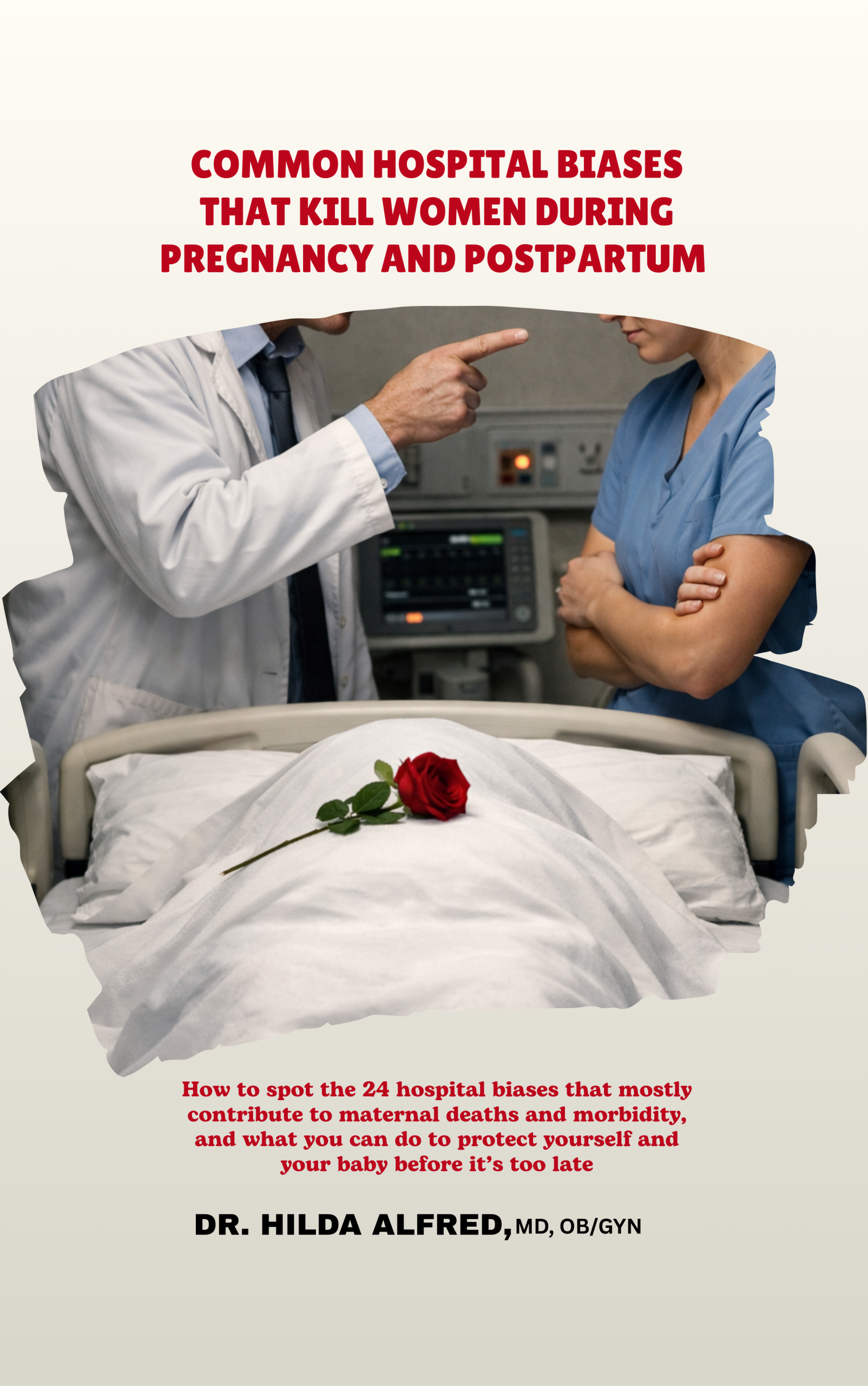
Description
This book is a conversation with a doctor who has seen the best and worst of maternal care, and she wants to show you how to be in charge of your own safety!
Let me be honest with you. In all my years of medicine, I have seen many books written to guide expectant mothers. Most of them are filled with the usual advice, the kind that speaks of nutrition and exercise and tells you what to expect each week. Very few dare to talk about the quiet truths, the unspoken reasons why some mothers do not come home. This is one of those rare books. It tackles a subject that is often whispered about in hospital corridors but rarely spoken aloud to patients: the role of bias in maternal care. This book is a conversation with a doctor who has seen the best and worst of maternal care.
In the pages that follow, Dr Hilda does something vital. She names the hidden forces that can shape your care. She talks about the assumptions a provider might make before you even speak, based on how you look, or your age, or your background. She explains how these quiet biases can slow down decisions, dismiss your concerns, and create deadly delays. This is not about blaming hardworking staff. It is about understanding how the system itself can sometimes fail to see you clearly.
I have read her manuscript carefully. As a researcher myself, I can tell you her work is meticulous, grounded in the very latest guidelines from the World Health Organisation and her own direct experience. She has a gift for taking complex, frightening ideas and making them clear and manageable. She gives you the language to advocate for yourself, turning knowledge into a form of protection.
This book is a conversation with a doctor who has seen the best and worst of maternal care. It is a toolkit for safety, written with compassion and profound respect for your intelligence. It is an honour to present it to you.
Professor Stellar Uche Akabo, Consultant in Maternal-Foetal Medicine, TX, USA


Natasha O. –
It made me so angry at the system. But anger is better than being dead.
Susan M. –
I sent this to my mother in law who told me “just trust the doctor.” She finally understands.
Keisha –
As a Black woman, seeing “Bias” in the title gave me validation. It lists the exact microaggressions.
Denise H. –
We bought 30 copies for our staff training. It changed how our nurses treat obese patients.
Martin L. –
The “Disability Bias” section is rare to find. As a wheelchair user, I felt seen.
Andrea –
Covers racism, homophobia, fatphobia, and ageism. Very thorough research.
Tamara –
Every woman of colour needs this in her hospital bag.
Tasha Williams –
My pain was dismissed as “anxiety.” This book gave me the language to demand an epidural.
Maria Silva –
Includes scripts for “What to say when they don’t believe you.” Priceless.
Amber –
The “Weight Bias” chapter saved me. They wanted to induce me early just because I am plus size.